Asian Street
Food Guide
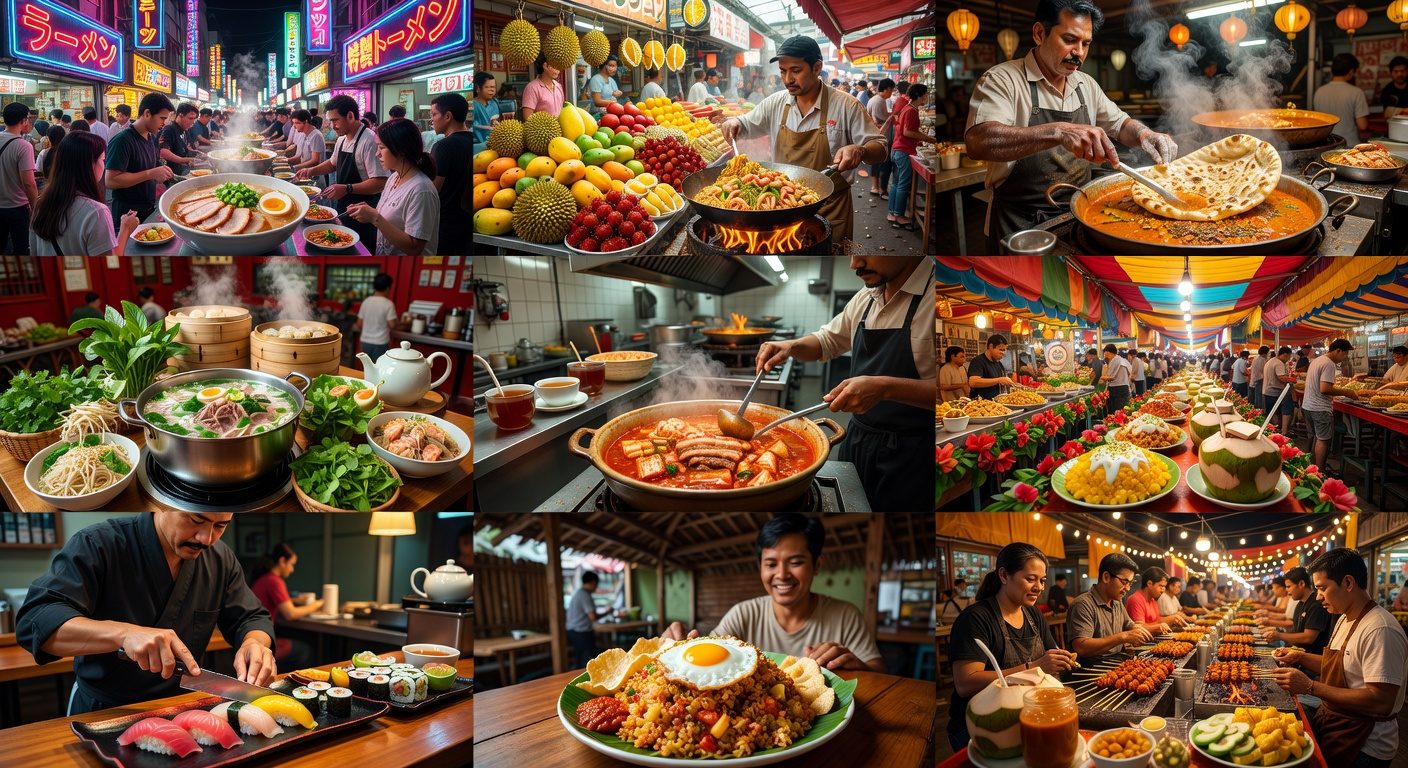
From Bangkok's sizzling woks to Hanoi's steaming pho cauldrons — Asia is the undisputed heartland of the world's greatest street food culture.
From Bangkok's sizzling woks to Hanoi's steaming pho cauldrons — Asia is the undisputed heartland of the world's greatest street food culture.
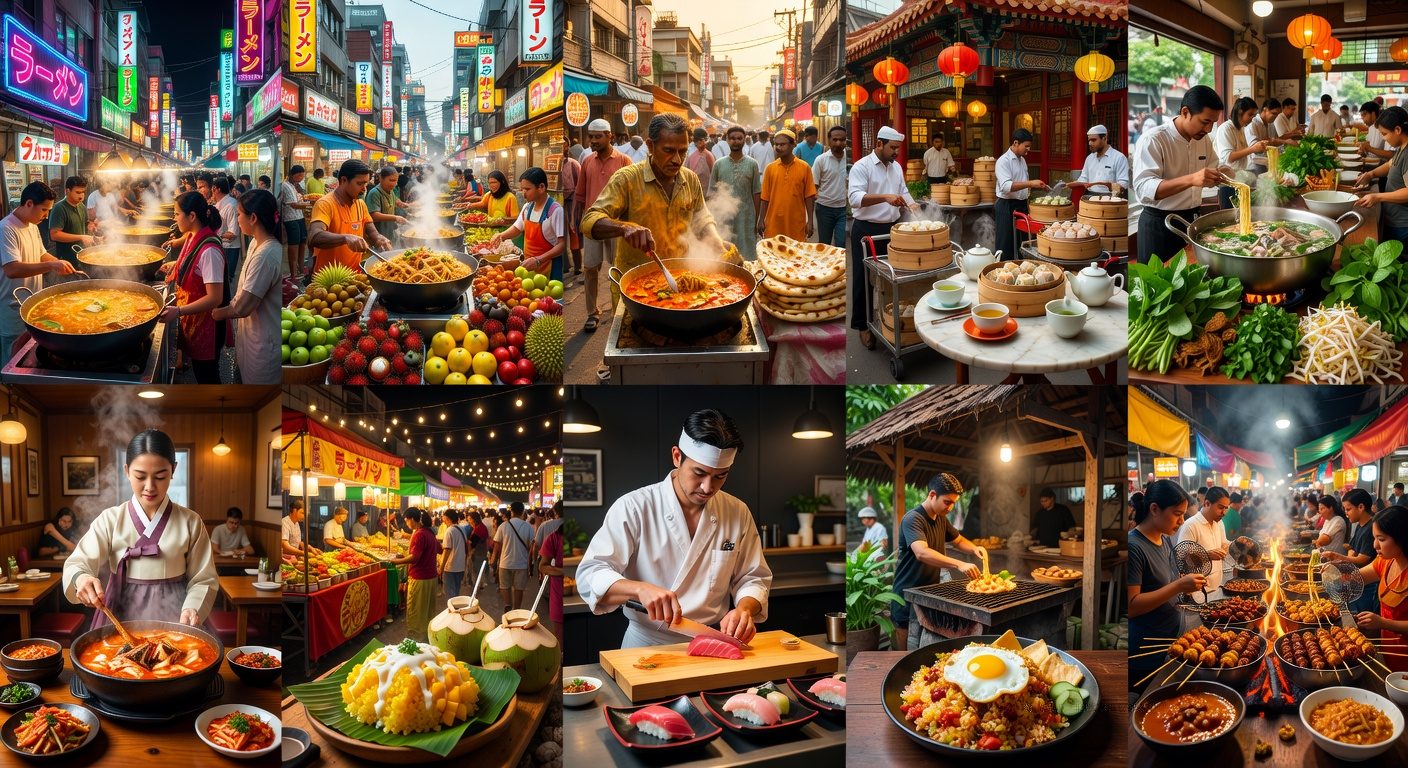
These are the dishes every food traveler must seek out — each one a masterpiece of bold flavour and centuries of culinary tradition.
Thailand's most beloved street food — rice noodles stir-fried in a tangy tamarind sauce with bean sprouts, peanuts, lime, and your choice of protein, cooked at lightning speed over a blazing wok.
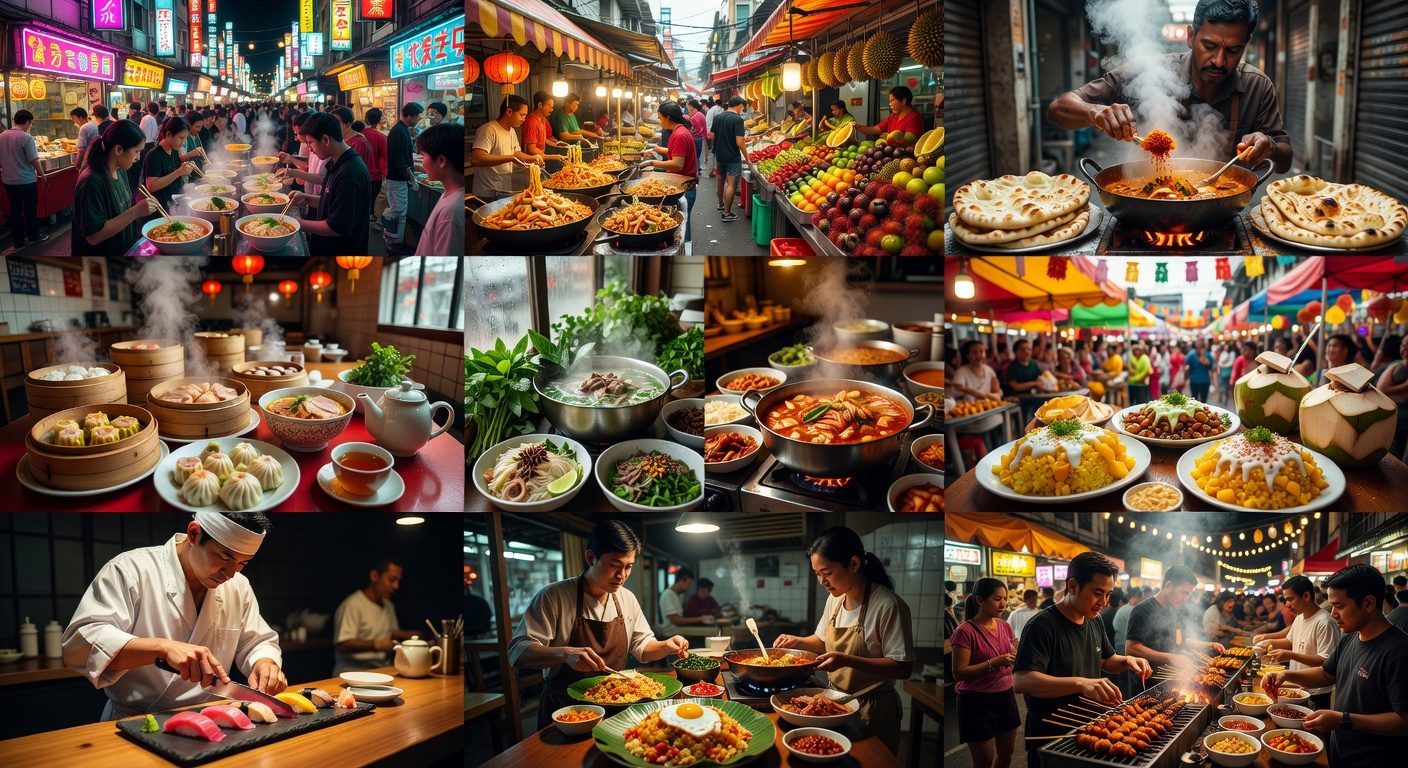
Vietnam's national dish is a deeply aromatic broth simmered for hours with star anise, cinnamon, and charred ginger, served over rice noodles with fresh herbs and wafer-thin slices of beef or chicken.
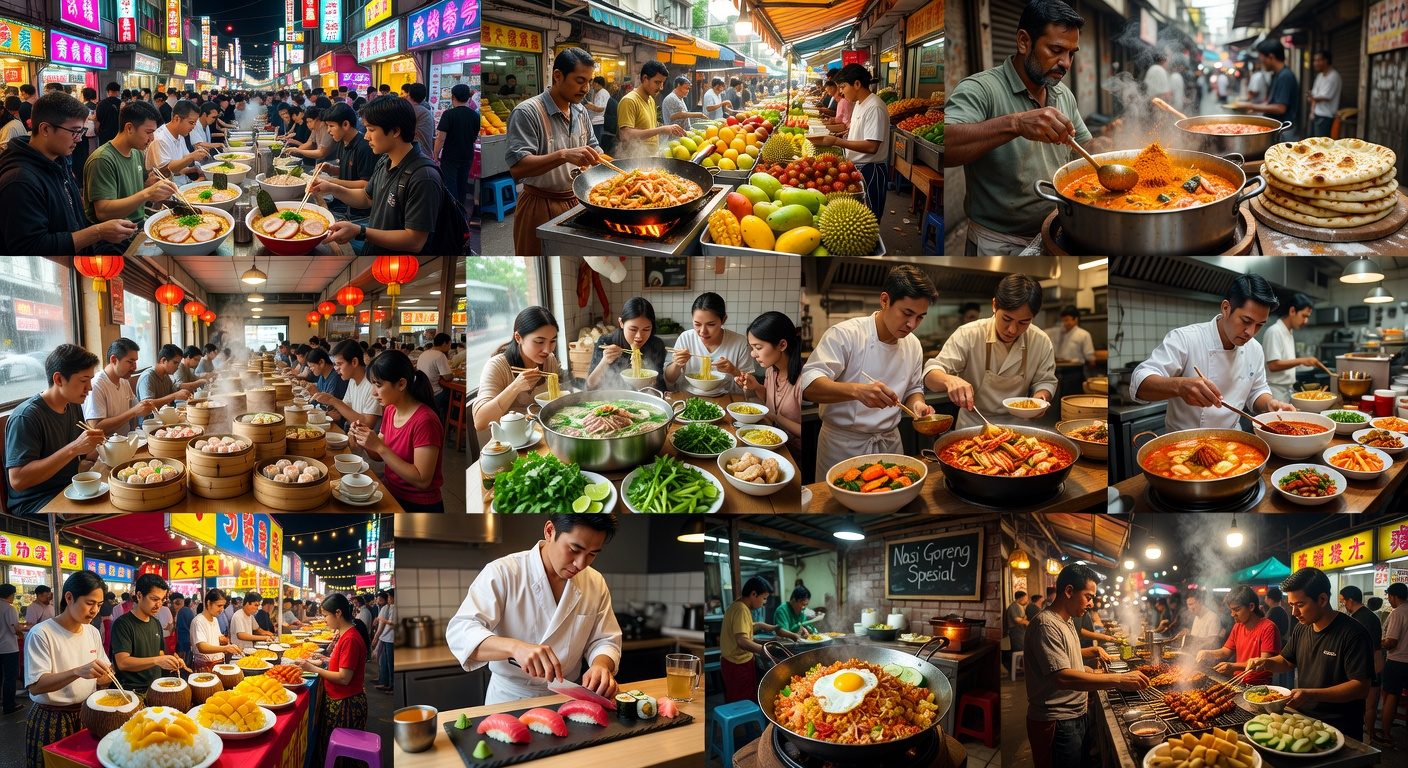
Skewers of marinated meat — typically chicken or beef — grilled over charcoal until caramelised and smoky, served with a rich, glossy peanut sauce and fresh cucumber. A Malay night market staple.
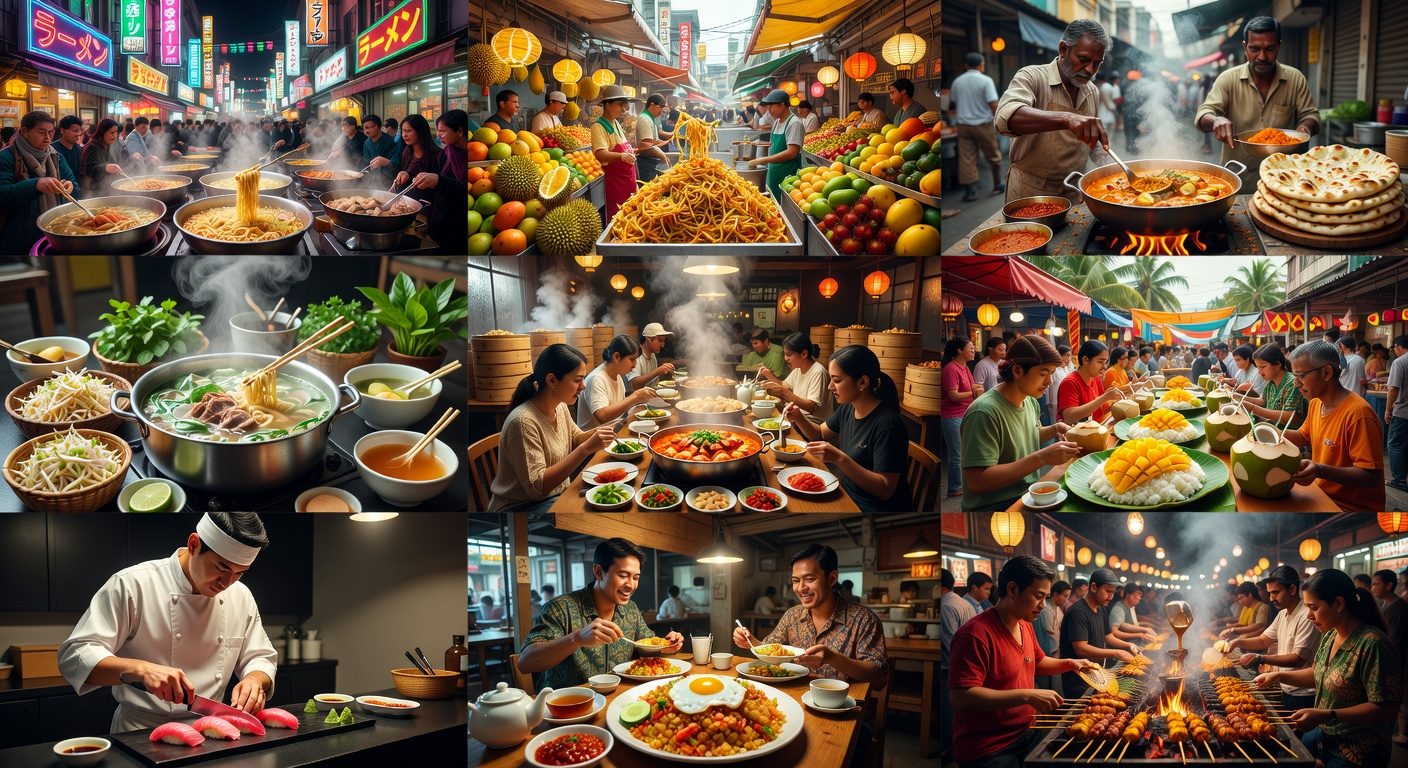
Indonesia's famous fried rice, flavoured with sweet kecap manis soy sauce, shrimp paste, and aromatics, topped with a fried egg, crispy shallots, and prawn crackers. Simple, perfect, unforgettable.
The Cantonese tradition of small, steamed and fried delicacies served in bamboo baskets — from delicate har gow shrimp dumplings to pillowy char siu bao and crispy turnip cake — best enjoyed with pu-erh tea.
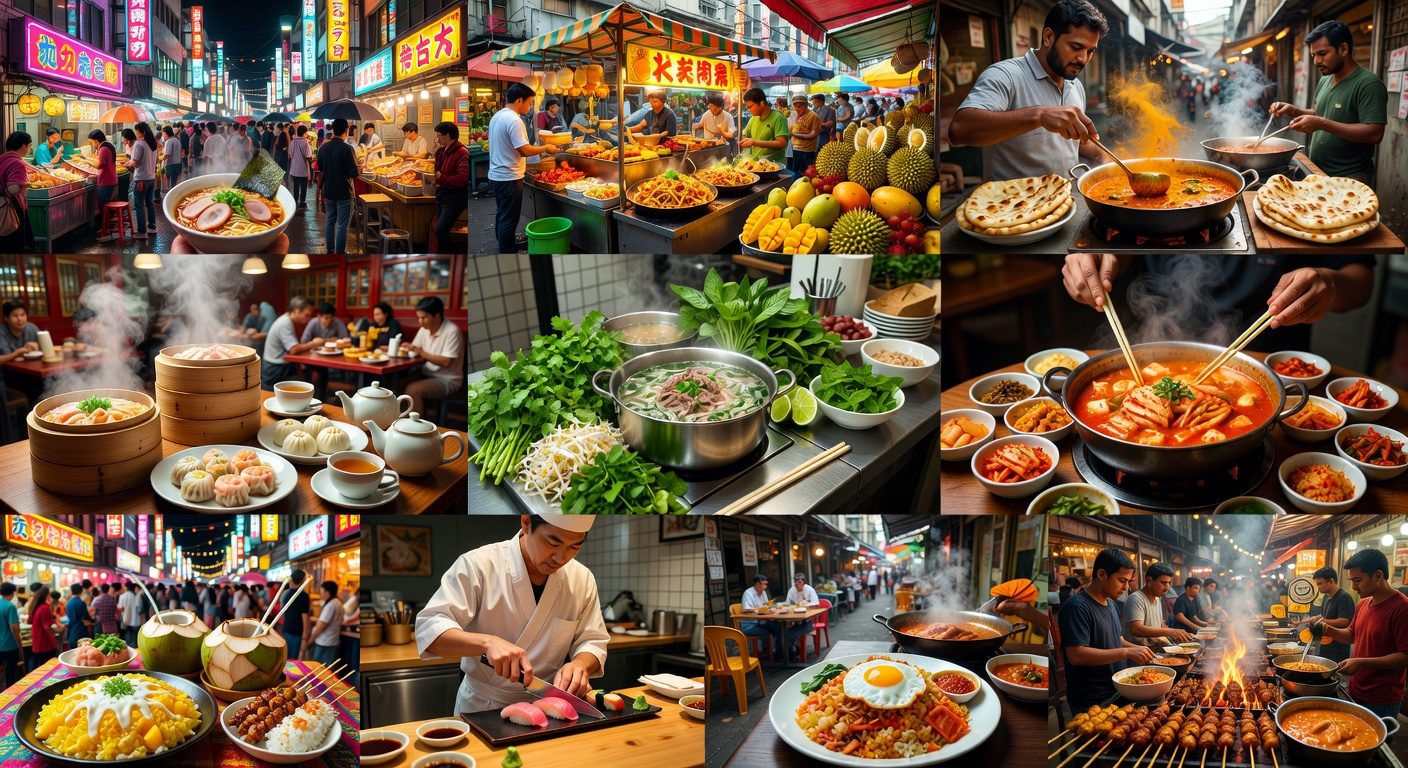
A deeply comforting Korean stew of well-fermented kimchi, tofu, pork belly, and gochugaru chilli paste, served bubbling hot in an earthenware pot alongside a bowl of steamed rice and an array of banchan sides.
Each city has its own street food personality — here's where to eat and what to order.
Bangkok's street food scene is unrivalled in sheer energy and diversity. From Yaowarat Chinatown's roast duck stalls to the legendary boat noodles of Arun Amarin Road.
Hanoi's Old Quarter is a labyrinth of ancient streets, each traditionally dedicated to a different craft — and many now home to legendary pho and bun cha vendors.
Singapore's hawker centres are legendary — UNESCO-recognised institutions where Malay, Chinese, and Indian traditions collide in a glorious multicultural feast.
Tokyo's street food culture thrives at festivals, food halls, and the legendary depachika basement food floors of its great department stores.
Taipei's night markets are arguably the world's finest — Shilin alone covers several city blocks, with hundreds of stalls serving classics like stinky tofu and oyster omelette.
George Town's UNESCO-listed heritage streets are also home to what many call Malaysia's greatest street food scene — a unique blend of Malay, Chinese, and Nyonya traditions.
Asia rewards the brave and curious street food eater. Follow these tips to eat safely, respectfully, and deliciously.
A long line of locals is the single best endorsement. If nobody is queuing, move on. If there's a wait, it's almost certainly worth it.
Food cooked fresh to order at high temperatures is the safest street food. Avoid pre-cooked dishes sitting at room temperature for extended periods.
Most street food vendors don't carry change for large bills. Always carry small local currency — it also makes ordering faster and smoother.
The best street food is eaten by locals during their lunch break. Look for stalls near markets, factories, and offices for maximum authenticity.
You're subscribed!